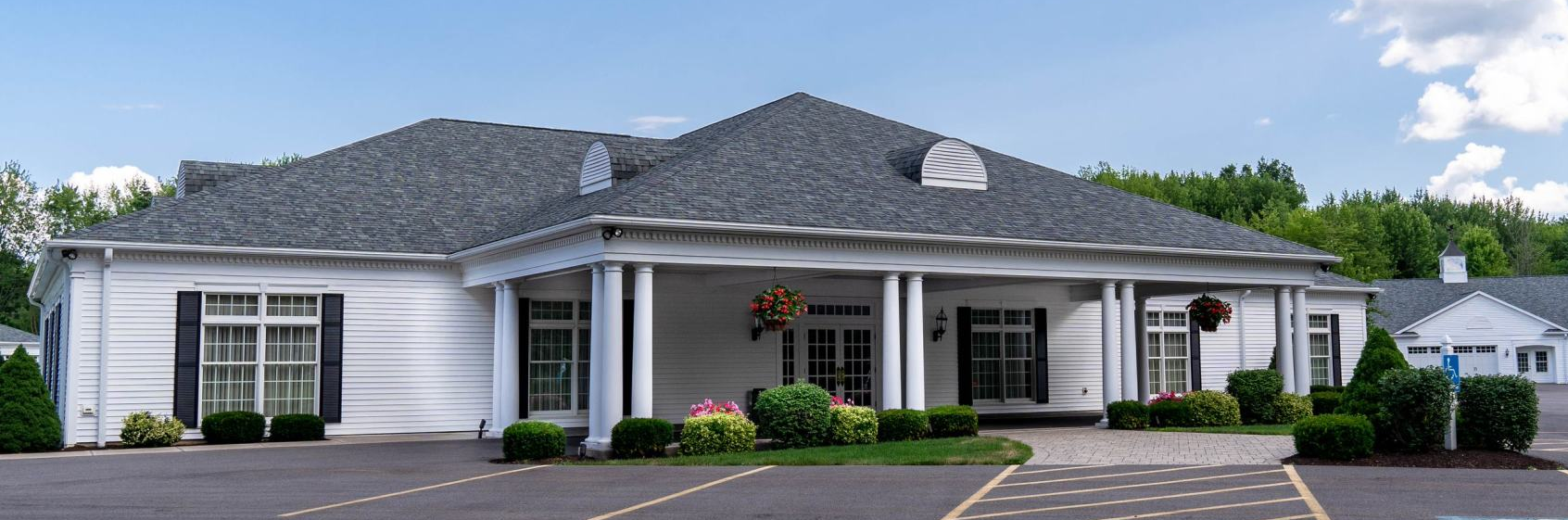
Schepp Family Funeral Homes
Call Us
EATON-TUBBS-SCHEPP FUNERAL HOME, INC.7191 EAST GENESEE STREET
FAYETTEVILLE, NY 13066-1267
(315) 637-3214
Newell - Fay Manlius Chapel
8171 Cazenovia Road
Manlius, NY 13104
315-682-5300
R.H. Schepp & Son Minoa Chapel
109 East Avenue
Minoa, NY 13116
315-656-3132
Find Us
EATON-TUBBS-SCHEPP FUNERAL HOME, INC.
7191 EAST GENESEE STREETFAYETTEVILLE, NY 13066-1267
(315) 637-3214
About Us
With the arrival of large national funeral conglomerates new to Syracuse, huge amounts of money are now being spent in advertising, especially about the price of funerals. While we agree that price is a very important factor, what you receive for that price and who provides it is just as important, if not more so. We would suggest you ask yourself who would you be more comfortable with in arranging these very important services– a family home with roots in the community going back over a century and a half who has served generations of families in our hometown, or a conglomerate where decisions are made at a corporate headquarters in another state based solely on what can be provided for one predetermined price? After you view the price survey( click here to view survey),and see that the prices at our family owned funeral homes are quite similar to even the large discount conglomerates, is there even a question as to where you would be most comfortable? We are so confident that you will not be able to find all of the options and features of our offerings anywhere, let alone at our very affordable pricing, we guarantee to provide the service you want at a price that is the same or less than you will find elsewhere. It is part of our unconditional satisfaction guarantee that our predecessors have always offered through the decades.
Funerals and memorials can only be done once, and they must be crafted carefully and with attention to detail. Please take a moment to consider the wide range of offerings we present to customize and personalize your service.
Again, thank you for visiting our site; we hope you find the information you’re looking for. If we can be of any further service or you desire to speak with us directly, please contact us at any one of the three facilities of your choice.
Thomas R. Schepp, Michael J. Small,
David G. Zinger, Erich A. Schepp
Obituaries
Recent Obituaries
Ballway, Buzz
May 22, 2013
Buzz Ballway
May 22, 2013
Edward J. “Buzz” Ballway, 63 of Kirkville, died unexpectedly on Wednesday, May 22. Born in Syracuse, he is the son of the late Edward J. Ballway and Emily (Stoecker) Ballway. Buzz worked for 39 years in the business forms industry and was Vice-President of Cooley Brand. He served on many business and community boards. He graduated from Cazenovia High School holding records as a running back and Track and Field runner. He was also a graduate of Loyola University, Montreal, Canada. Buzz was an avid hunter and fisherman, was passionate about his coin collecting and spending time on his boat with family and friends. He volunteered at Francis House, American Red Cross and was also an Angel Investor. Buzz is survived by his wife, Sharon Ballway (Sawyer); sons, Bryce Ballway (Ashley Day) of Chittenango, Matthew (Brooke) Tedesco of East Syracuse and daughter Kristine Forsythe of East Syracuse and seven grandchildren, Aiden, Alana, Caleb, Kaitlyn, Jackson, Tyler and Wyatt Edward; brothers, Chris (Ronni) Ballway of Cazenovia and Mesa, AZ and Matthew (Terry) Ballway of Chandler, AZ, and sisters, Mary Bridget (Barry) Pasetti of Leigh Acres, FL, Mary Kate (Eric) Gang of Syracuse, Mary Johanna (Jim) Guynn of Oswego and Mary Patricia Hutchinson of Glendale, AZ, as well as several nieces and nephews. Calling hours will be held Tuesday, 4 to 8 pm at Eaton-Tubbs Fayetteville Chapel, 7191 East Genesee Street, Fayetteville. A Funeral Mass will be held on Wednesday at 10 am at St. Matthew’s Church, 229 W. Yates St. Burial will follow at Kirkville Cemetery. Contributions in memory of Buzz, may be made to Cazenovia High School Scholarship Fund, 31 Emory Avenue, Cazenovia, NY 13035, Francis House, 108 Michaels Avenue, Syracuse, NY 13208 or American Heart Association, 17 Technology Place, PO Box 3049, Syracuse, NY 13220-3049.
Send Flowers
Hartman, David
May 20, 2013
David Hartman
May 20, 2013
David K. Hartman David K. Hartman passed away on Monday at the age of 93. He was the youngest of a family of five siblings born in Reno, NV to astronomer Dr. Edith K. Hartman and former President of the University of Nevada Dr. Leon W. Hartman. The last remaining member of his family, Dave was predeceased by his brothers Paul and Fred, and sisters Margaret and Sara. His love for the earth and skies developed early as he grew up an Eagle Scout and stargazer in the Reno area of what he called “God’s country”, the Nevada Mountains. Dave attended the University of Nevada at Reno, and was president of his senior class. He earned Bachelor’s degrees in Engineering, Math and Physics, and worked for a summer at the newly built Hoover Dam. During the war, he worked on military components, including radar and equipment for the Manhattan project, at General Electric in Pittsfield, MA. There he met his wife and lifelong partner, Jean (McAllister) Hartman. They were married in September of 1945, and began their new life by attending graduate school together. He earned his Master’s degrees in Physics and Electrical Engineering at the University of Minnesota on a Gulf Oil fellowship, where he also taught in the EE department. Dave returned to work for GE in 1952, moving his growing family to the Fayetteville-Manlius area. His career at GE spanned a total of 32 years. Beginning from the dawn of the transistor, he served as a consulting engineer, manager, and leader of an advanced development group for semiconductor products. His knowledge and expertise in the semiconductor field brought him worldwide travel, including multiple trips to Japan. In retirement, he and Jean continued to travel the world, where he photographed the beauty of Europe, Russia and New Zealand. Dave and Jean were both proud and active members of the United Church of Fayetteville since 1954. During that period, Dave served as a Sunday school teacher, and led the board of Deacons and Elders. He also belonged to the Men’s Covenant Group and served countless Meals on Wheels. Dave traveled to all 50 states, but held a special love for Nevada. Dave and Jean loved their Cherry Manor residence and neighbors. He kept immaculate gardens, was an avid bird watcher, and fought a lifelong private war with the squirrels that threatened his feeders. He was a positive thinker and above all loved and cared for his wife, children and grandchildren. Recently predeceased by wife of 67 years Jean, Dave is survived by sons Eric, Jon (Mary) and Peter (Rose), and four grandchildren, Rebecca, Sarah, Molly and Michael, and several nieces and nephews. Relatives and friends are invited to call on Friday from 4-7 pm at Eaton-Tubbs Fayetteville Chapel, 7191 E. Genesee St., Fayetteville. Memorial Services will be held on Saturday at 10:00 am at the United Church of Fayetteville, 310 E. Genesee St., Fayetteville.
Send Flowers
Hagelin, Theodore
May 18, 2013
Theodore Hagelin
May 18, 2013
Theodore Hagelin, 70, of Manlius died on Saturday, May 18, 2013. Ted was a Professor of Law for over 40 years with 35 of those years teaching at the Syracuse University College of Law. He is remembered professionally for his innovative and pioneering work in the fields of intellectual property and technology commercialization. His insatiable curiosity and passion for learning inspired all who knew him. Ted was loved and respected as a teacher, mentor, colleague, son, brother, husband, father, and grandfather. He is survived by his wife of 47 years, Ronile Lawrence; a son, Mark Hagelin; a daughter, Sarah Hagelin; a granddaughter, Emma Hagelin; a brother, Timon Hagelin; a sister, Kendall McTear; and his nieces and nephews. A memorial service will be held at 3:00 PM on Thursday, May 30th, at Hendricks Chapel on the Syracuse University campus. To continue to celebrate his life and teaching, in lieu of flowers, the family requests that donations be made in his memory to Syracuse University College of Law, Suite 425, Syracuse, NY 13244-1030. These funds will be used to establish a scholarship in Ted’s memory.
Send Flowers
Donlon, William
May 18, 2013
William Donlon
May 18, 2013
William J. “Bill” Donlon passed away on May 18, 2013, in Charlotte, North Carolina surrounded by the love of his family. The son of the late Margaret Shanahan Donlon and Charles Donlon, Bill was born in Albany, New York on January 28, 1930. After graduating from Vincentian Institute in Albany in 1947, Bill joined Niagara Mohawk Power Corporation where he would work for 46 years. Bill’s opportunity at Niagara Mohawk was made possible by his mother Margaret who supported her family as a cafeteria worker for the company in South Albany. Bill married his high school sweetheart, Patricia “Pat” Pommer Donlon, in Albany in 1952. Together they would have six beloved children during their 40 year marriage. In 1952, Bill left the power company briefly to serve his country in the United States Navy during the Korean War. He spent most of his military service in the Mediterranean, on the USS Bennington aircraft carrier where he was assigned to the electrical division. Upon his return from military service, Bill rejoined Niagara Mohawk and started his family with Pat in Albany. Bill’s unprecedented career at Niagara Mohawk would see him rise from meter reader to Chief Executive Officer. Bill enrolled in night classes at Siena College, while working full time during the day. After eight years and while raising the first four of his six children, he graduated in 1962 earning a double degree in finance and economics. Later that year, Bill was transferred to Buffalo, New York. With his career on a sharp rise in Western, NY, Bill’s family continued to grow as did his involvement and contributions to the Buffalo Community. It was also during his tenure in Buffalo that he developed his lifelong loyalty as a huge Buffalo Bills fan. He also participated in numerous civic and charitable activities including serving as Chairman of the Erie County United Way and President of the Buffalo Junior Chamber of Commerce. It was in Buffalo that Bill also began his many years of coaching and supporting league championship baseball, softball and basketball teams on which his children played. He was an avid sportsman and golfer. In 1970, Bill and his family moved back to Albany where his family and civic activities flourished. Bill moved with his family to Syracuse in 1976 when we was promoted to Senior Vice President. He was named President of Niagara Mohawk in 1980 and his career reached its pinnacle when he was named Chief Executive and Chairman of the Board in 1988, the positions he held until his retirement in 1993. Bill’s professional and community activities, and above all else, his character and personal relationships and contributions resulted in him receiving the prestigious Horatio Alger Award in 1993. Bill served as a trustee of Syracuse University, Lemoyne College, both in Syracuse. He also served as a trustee the State University of Albany Foundation, Siena College, his alma mater, and the College of Saint Rose, from which he earned an honorary doctor of laws degree in 1981. As a proud Irishman, he had the time of his life as the 1993 Grand Marshall of the Syracuse St. Patrick’s Day Parade. He was also the founding Chairman of the Syracuse Chapter of the Success by Six program. As a result of this and other civic and charitable contributions the Donlon Awards were created and are given annually to employers of choice in the Central New York region by The Manufacturers Association of Central New York, the Greater Syracuse Chamber of Commerce and The Metropolitan Development Association. Bill was named the 1994 Humanitarian of the Year by the Syracuse Junior Chamber of Commerce. In 2011 Bill moved to the Charlotte, North Carolina area where he continued to cheer for and watch his Syracuse University sports teams and the Buffalo Bills. Bill touched many lives and will be greatly missed. In addition to his parents, Bill was predeceased by his former wife Patricia Pommer Donlon, sister Helen Donlon Hanrahan, brothers-in-law, Peter George Jr., James Hanrahan and Richard Pommer, and nephews James Hanrahan and Peter George III. He is survived by his sister Jean George, six beloved children Deborah (Lorraine) of Charleston, SC, William (Debra) of Syracuse, Robert (Pam) of Charlotte, Susan Donlon Raab (Jim) of Syracuse, James of Washington, DC, Brian (Lisa) of Chicago, twelve grandchildren, 3 great-grandchildren and many nieces and nephews. His greatest treasures were his children, grandchildren and other relatives. For the former CEO of a power company, it can be said he produced a greater source of energy under the roof of the warm and loving homes he filled with the laughter and voices of his children and grandchildren, including on annual vacations to Nantucket Island and on Thanksgiving get togethers. Our deepest and most sincere thanks to Rita, Susie, Deeva and all the other kind and wonderful caregivers at the Laurels, as well to Vickie, Amanda and Dr. Kabbath and the other talented and caring nurses and doctors at CMC-Pineville. Relatives and friends are invited to call on Wednesday, May 22, 2013 from 5-9 pm at Newell-Fay Manlius Chapel, 8171 Cazenovia Rd. (Rt. 92), Manlius. A Mass of Christian Burial will be held on Thursday, May 23, 2013 at 10:00 am at St. Ann’s Church, 104 Academy St., Manlius. Family burial will be held at 10:00 am on Friday, May 24, 2013 at St. Agnes Cemetery, Menands, New York. In lieu of flowers, contributions may be made to the Syracuse Chapter of Success by Six, 518 James St., PO Box 2129, Syracuse, NY 13220 or the CNY Ronald McDonald House, cnyronaldmcdonaldhouse.org.
Send Flowers
Myers, Leo
May 16, 2013
Leo Myers
May 16, 2013
Leo E. Myers, 89, of Jamesville, NY passed away peacefully on May 16, 2013 at Crouse Hospital. A resident of Kirkville, NY for 80 years, Leo was employed by Penn Central Railroad as a car inspector for 43 years and was a member of the Transport Workers Union. He served in World War II in the European theater as a US Army medic, and he was a member of the American Legion. His last nine years were enjoyed as a resident of the Nottingham Retirement Community, where he participated in the Nottingales Singing Group. He also enjoyed Thursdays with the Minoa Golden Age Club. Leo will be remembered for his good humor, love of life and endless energy. He was a figure larger than life; he filled a room with his presence and outspoken optimism. He is survived by his loving wife of 67 years, Daisy Everling Myers; a brother James R. Myers (Barbara); a daughter Linda A. Joyce (Michael); a son Thomas E. Myers (Christine); five granddaughters: Michelle Ceglie (Rob), Carrie Erickson (Jay), Johanna Myers, Patricia Myers and Dr. Jessica Myers; and four great-grandchildren. A Mass of Christian Burial will be held on Wednesday, May 22 at 10:00 am at St. Mary’s Church, 401 North Main Street, Minoa. Calling hours will be held Tuesday, May 21 from 2-4 and 6-8 pm at R. H. Schepp & Son Minoa Chapel, 109 East Avenue, Minoa. In lieu of flowers, contributions may be sent to the Nottingham Resident Forum Employee Appreciation Program, 1301 Nottingham Road, Jamesville, NY 13078.
Send Flowers
Zimmerman, Edward
May 16, 2013
Edward Zimmerman
May 16, 2013
Edward P. Zimmerman, 89, of East Syracuse, passed away on Thursday. He retired from Carrier Corp. where he was an engineer for many years. He was a veteran having served in WWII and was also a sports enthusiast. He was predeceased by his wife Ann in 2011. He is survived by his sister Mickey Houston and several nieces and nephews. Services: will be private with burial to follow at White Chapel Memory Gardens.
Send Flowers
Partridge, Frederick
May 15, 2013
Frederick Partridge
May 15, 2013
Frederick J. Partridge, 69, of Fayetteville, passed away on Wednesday at Crouse Hospital surrounded by his loving family. He graduated from Fabius Central School, he was a retired Chief Petty Officer of the US Navy for 20 years. He retired from the F-M School district as a mail courier. He was a life member of the Fayetteville Fire Department and he enjoyed spending time at his camp in the Adirondacks. He is predeceased by his parents, Edwin and Velma Partridge and his brother, Paul Partridge. He is survived by his wife of 48 years, Alice Ford Partridge; his daughters, Anna (Kevin) Merritt, Alica (Tom) Ziebarth, Angela (David ) Argus and Anita (Eric) West; 9 grandchildren and 3 great-grandchildren; his brother Donald (Linda) Partridge; sisters, Judy (Roland) Cornwell, Cynthia Partridge and Nancy (Jerry) Crouse; his sister-in-law, Penny Partridge; and several nieces and nephews. Services will be 10:00 am Monday at Eaton-Tubbs Fayetteville Chapel. Burial will be in Fabius Evergreen Cemetery. Family and friends may call from 2:00 to 5:00 pm Sunday at the funeral home, 7191 E. Genesee St., Fayetteville. Contributions: may be made to the Fayetteville Fire Department, 425 E. Genesee St., Fayetteville, NY 13066.
Send Flowers
Gottheld, Judith
May 13, 2013
Judith Gottheld
May 13, 2013
Judith A. Gottheld, 70, of Manlius, passed away on Monday at home. She was born in Charleroi, PA. on August 13, 1942. She graduated from W. Penn Hospital School of Nursing in Pittsburgh, PA in 1963 and from Washington Hospital School of Anesthesia in Washington, PA in 1974. Mrs. Gottheld was a library assistant at Eagle Hill Middle School in Manlius for over 25 years. She is survived by he husband of 49 years, William F.; a son J. Scott (Pamela) Gottheld of Manlius; a daughter, Jennifer (Mark) Campanella of Webster; a brother, J. Bruce (Jenny) Miller of Harrisonburg, VA; and four grandchildren, William, Christopher, Jacob and Alexandra. Relatives and friends are invited to call on Friday from 4-7 pm at Newell-Fay Manlius Chapel, 8171 Cazenovia Rd. (Rt. 92), Manlius. Funeral services will be private. Burial will be in Manlius Village Cemetery. In lieu of flowers, contributions may be made to the Fayetteville-Manlius School District c/o Eagle Hill Library, 4645 Enders Rd., Manlius, NY 13104.
Send Flowers
Kirchner, Glynn
May 12, 2013
Glynn Kirchner
May 12, 2013
Glynn J. Kirchner, of Brockport, NY, passed away peacefully at home Sunday with his family at his side. He was born May 5, 1930, the son of the late William and Elizabeth Cornelly Kirchner. Glynn served in the US Army during the Korean War, the US Army Reserve and NYS Guard. He worked for the Rochester Carpenters Union for 64 years. He participated in the Empire and NY State Games, US Masters Swimming and Monroe County Senior Games; receiving 2 Gold, 9 Silver and 11 Bronze medals. He is survived by daughters, Kathleen Boetcher (Tom) Ragonese, Karen (Kevin) Foran of Manlius, Amy Kirchner (Patrick Brown), and Susan (Steven) Weiner; mother of his children, Sue C. Kirchner (Gibney); 10 grandchildren; 3 great-grandchildren; many nieces and nephews; and many close and true friends, who were guiding lights on a spiritual path. Services were held at St. Paul’s Episcopal Church in Holley, NY. In lieu of flowers, contributions may be made to the American Cancer Society, 6725 Lyons Street, P.O.B. 7, East Syracuse, N.Y 13057.
Send Flowers
Bahouth, John "Jack"
May 12, 2013
John "Jack" Bahouth
May 12, 2013
John “Jack” Mitchell Bahouth, MD, 58, of Dexter, Georgia died tragically May 12, 2013. While jogging, he was hit by an automobile. He was born on February 14, 1955 in Syracuse. Jack was predeceased by his father, Nicholas Paul Bahouth. Surviving are his loving wife, Violina; mother, Hermine; sisters, Judith B. Dyne, Jill B. McAndrew (Dennis); brother, Jed; nephew, Douglas D. Dyne; nieces, Jessica J. McAndrew, Alaina J. Dyne and Colleen M. McAndrew. Jack attended West Point Military Academy and graduated from Ohio Wesleyan with a Bachelor of Science. He received his medical degree from the School of Medicine, State University of New York at Buffalo. Jack was active with Doctors Without Borders. He served in the US Army Reserves as a physician in Bosnia and Landstuhl, Germany and retired as a Lieutenant Colonel. He was Medical Director of Radiology at Fairview Park Hospital in Dublin, Georgia. He practiced 32 years as a Neuroradiologist. A memorial service will be planned locally for family and friends. In lieu of flowers, contributions may be made to ASPCA, 5878 East Molloy Rd., Syracuse, NY 13211.
Send Flowers
Martin, John
May 10, 2013
John Martin
May 10, 2013
John W. Martin, 65, of East Syracuse, passed away unexpectedly after a long illness on Friday. He was a retired truck driver and served in the Signal Corps. John enjoyed cooking and gardening as well as carpentry. He was predeceased by his father John E. Martin. Survivors: his daughter Lindsay Martin; son Richard Martin; Mother Palma J. Parise Martin; granddaughter Elizabeth Martin; sister Elaine (Tom) Vasiloff; brother Daniel (Sheila) Martin as well as several nieces, nephews and cousins. Services: 10:00 am Wednesday at R. H. Schepp & Son Minoa Chapel, burial will follow at Assumption Cemetery. Family and friends may call from 4:00 to 7:00 pm Tuesday at the funeral home, 109 East Avenue, Minoa.
Send Flowers
Kasberger, Thomas
May 6, 2013
Thomas Kasberger
May 6, 2013
Thomas S. (Tom) Kasberger, 86 of Punta Gorda, Fla., passed away on Monday from complications of Parkinson’s disease. He was born to the late John (Jack) and Lucy (nee Moran) Kasberger on October 24th, 1926. After graduating from Syracuse University, Tom proudly served in the US Navy, Pacific Fleet during WWII. Later Tom had a very long and successful career in the development and sales of the first Xerox large volume copiers and went on to sell thousands of duplication devices until he retired at 72. Tom was an active & devoted member of Sacred Heart Catholic Church in Punta Gorda, Fla. In addition to his strong love of faith and family, Tom was an avid historian, enjoyed reading, loved to write and had a sly sense of humor with a whimsical grin that made everyone around him smile. Tom will be greatly missed and is survived by his beloved wife & best friend, Nancy; faithful companion Max; two sons, John S. (Vera) Kasberger IV of Cottage Grove, OR; and Mark (Jeanette) Kasberger of Rolling Meadows, IL; daughter, Karyn (Victor) Vasquez of Elgin, IL; two step sons, Ken Jaquith of Falmouth, MA; and Scott (Laura) Jaquith of Syracuse, NY; step daughter Amy [Carter] Challen of Port Charlotte, Fla.; 10 grandchildren & 12 great grandchildren. He was preceded in death by a brother John (Jack) S. Kasberger III, and sister Mary Kay Kasberger. A Mass of Christian Burial will be celebrated on Friday at 10:00 am at Holy Cross, Church. Burial will follow in St. Mary’s Cemetery in DeWitt. A calling hour will be held on Friday from 9-10 am at the church, 4112 E. Genesee St., DeWitt. In lieu of flowers, memorial contributions may be made in his name to the National Parkinson Foundation – www.parkinson.org.
Send Flowers
Hudson, Albert
May 5, 2013
Albert Hudson
May 5, 2013
Albert C. Hudson, 86, of Central Park Nursing Home, and formerly of Liverpool, passed away on Sunday at the VA Medical Center. He was born on May 21, 1926 in Milton Jct., Wisconsin, the son of the late Robert and Tille Hudson. He served with the US Navy Seebees during World War II. Albert was Parts Sales Manager for Great Dane, retiring in 1989. He was predeceased by his wife Jacqueline A. Hudson in 2001. He is survived by three daughters, Marilyn A. Hudson of Liverpool, Patti J. Hemingway of Bridgeport, and Kathy L. Charette of Tucson, AZ; two sons, Timothy A. Hudson of Jonesboro, AK, and John P. Hudson of Bridgeport; a sister, Hope Vierck; four grandchildren, Paul Michael Hudson of Jonesboro, AK, Thara Hemingway and Tom Hemingway, Jr., of Bridgeport and Jonathon Charette of Manlius; and four great grandchildren. Relatives and friends are invited to call on Tuesday (today) from 5-7 pm at Eaton-Tubbs Fayetteville Chapel, 7191 E. Genesee St., Fayetteville. Private burial will be in Onondaga Veterans Cemetery.
Send Flowers
Reger, Phyllis
May 2, 2013
Phyllis Reger
May 2, 2013
Phyllis E. Reger passed away peacefully on May 2, 2013 in Cazenovia, NY. Born to Percy and Helen Farley on May 6, 1921, she was predeceased by her younger brother Irving. Phyllis took pride in her service as an Army flight nurse in the Pacific Front during WW II. Upon returning home, she continued in the nursing field as a head nurse on the maternity ward at Highland Hospital where her tenderness and caring touch affected many lives. She married Rudolph Reger in 1946, also a WW II veteran and had two children; a daughter and a son. A woman of unfailing loyalty, with an incredible work ethic, she often worked long hours or off-shifts to help support her family. Throughout her life, she remained an avid reader, with a sharp wit and a dry sense of humor. Though a quiet, unassuming person, she had an uncanny ability to draw others toward her light, and was adored by those who knew her. She is survived by her daughter, Nancy Hill, son Ken Reger and wife Beth, grandchildren Tim and Kyle Reger, Emily Lamarche, and great-grandchildren Anna and Sofie Reger, and Max and Jackson Reger. Memorial services will be held on her 92nd birthday, Monday, May 6, 2013 at St. Mark's Lutheran Church in Mendon, NY at 2:00PM. She will be interred at Sampson Veterans Memorial Cemetery. In lieu of flowers, gifts can be made to the Team Max Restrictive Fund 44775 at the Upstate Golisano Children’s Hospital.
Send Flowers
Hartman, Jean
May 2, 2013
Jean Hartman
May 2, 2013
Jean M. Hartman passed away on Thursday at the age of 91. She was the fourth of five siblings born to parents Albert and Anna (Clute) McAllister in Saratoga Springs, NY. The last remaining member of her family, Jean was predeceased by brothers Ford, Norm, James, and Robert. She grew up in the Saratoga area, where she excelled in scholarship and shared her love for music by singing throughout high school and beyond. Jean graduated from the State Teacher’s College at Albany in 1943. During wartime, she moved to Pittsfield, MA, taking a job at General Electric. There she met her husband and lifelong partner, David. They were married in September of 1945, beginning their new life by attending graduate school together. She earned her Master’s degree in Mathematics and Biostatistics at the University of Minnesota, where she also taught several courses. The family moved to the Fayetteville-Manlius area, where they were actively involved in their church and community. Jean spent many years serving on various civic boards and singing with the church choir. She taught Mathematics for 17 years in the Jamesville-Dewitt Central School District. Jean is survived by her loving husband of 67 years, David, sons Eric, Jon (Mary) and Peter (Rose), and four grandchildren, Rebecca, Sarah, Molly and Michael, and several nieces and nephews. Private prayer services were held for family. A memorial service will take place at 1:00 PM on May 18th at the United Church of Fayetteville. In lieu of flowers, contributions may be made to the United Church of Fayetteville, 310 E. Genesee St., Fayetteville.
Send Flowers
Search Obituaries
|
|
Planning a Funeral
Most of us are not prepared to plan and carry out a funeral ceremony for someone we love. And so much of the information available on this critically important subject fails to focus on what is most important: having a personalized, meaningful funeral that helps families and friends begin the healing process of mourning after the death of someone we love.
This section includes information that will help provide insights necessary to help you and your family create a meaningful funeral experience that both honors the life of your loved one and starts you on the path to healing from your loss. Some of the content on these pages is adapted from a website called www.MeaningfulFunerals.com and the teachings of Dr. Alan Wolfelt, a noted grief expert.
To learn more about Dr. Wolfelt, please visit www.centerforloss.com
Our funeral home's dedicated staff wants to help you and can play a critical role in planning and carrying out a meaningful funeral or memorial service. Our licensed funeral directors are intimately familiar with the funeral planning process, key decisions a grieving family must make, and necessary legal documentation that is required during this difficult time. Our funeral professionals can handle all of the details and help you create a unique service that fits your needs and values.
For more information, please select from the links below:
Meaningful Funerals
"You can have the experience and miss the meaning."
- T.S. Elliott
Meaningful Funerals
Meaningful funeral ceremonies make a significant difference in how families channel their grief toward health and healing. During the funeral, the community comes together and responds to the reality that someone has died, and also to the reality that those remaining will need support, compassion, love, hope, and understanding. The funeral encourages you to think about the person who has died and to explore the meaning of their life and the ways in which they touched the lives of others.
The remembering, reflecting and choices that take place in the planning and conducting of the funeral service are often an important part of the process of grief and mourning. And ultimately, this process of contemplation and discovery creates a memorable and moving funeral experience for all who attend.
Why Have a Funeral?
When we experience the death of someone we love, a funeral service fills several important needs. First, it provides for the dignified and respectful care of the person and special tribute to their life. Equally important, the funeral service helps survivors face the reality of death, which is the first big step toward taking grief from the inside and allowing us to express it on the outside through mourning. Together, close friends and relatives can lend support and consolation when they're needed most.
Learn more at MeaningfulFunerals.com
What Makes a Funeral Meaningful?
No matter what kind of funeral ceremony you are planning, it helps to understand the components of a meaningful funeral. Meaningful funerals are made up of different parts that, when combined together, make for an incredibly emotional experience for you, your family and friends.
Meaningful Choices
Helping You and Your Family Create a Meaningful FuneralThis is a naturally difficult time, compounded by the fact that you are faced with many decisions that must be made as you begin to plan the funeral. You may feel overwhelmed by these decisions. When you are able to make informed choices, you are empowered with the important information needed to plan a meaningful funeral.
This is not the time to deny your need to mourn and embrace painful feelings of grief in the coming days. You may feel deep sadness as you plan this funeral and begin to acknowledge the reality that someone who you love has died. But when all is said and done, you will feel deep satisfaction that you helped plan a meaningful tribute or ceremony for someone who meant so much to your own life, and you will be on the path to a healthy grieving process.
Making Informed Funeral Choices
After selecting a funeral home, you and your family will choose the type of funeral service to hold, what will happen to the body and where it will be laid to rest. How a body will be cared for after death is an important decision. Whether you choose burial or cremation, you can use elements of ceremony to honor the life of your loved one and to allow you and your family to say goodbye in a meaningful way.
Key Choices
Key Choices Needed to be Made for a Meaningful Funeral As you begin to think about the funeral and the many options you have, you may be faced with the conflict of honoring the wishes of the person who died as well as your own wishes as survivors. While it is natural to want to meet the requests of the person who died, do consider changes that will be helpful to you, your family and friends. Begin a Family ConversationIt is often helpful to have a family conversation before going to see a funeral director. This can be a time for expressing your grief together as well as a time for some initial decision-making. Try as best you can to include everyone in the discussion. No one should feel left out.
The Arrangement ConferenceYou may have already scheduled a time to meet with your funeral director to help you plan the funeral. This meeting is called the “arrangement conference.” During the arrangement conference, the funeral director will explain all of the choices available to you and your family, help you make decisions to create your unique funeral, and gather important information about the person who died to complete necessary documents. Above all else, the funeral director will assist you in both arranging for and carrying out a meaningful funeral.
What Kind of Funeral Service Will You Have?You can choose from a variety of funeral service types and formats. Some people think funerals must conform to traditional ways, but there is no one right way to have a funeral. Just as grief has many dimensions and is experienced in different ways by different people, funerals are also unique. A funeral should simply be fitting for the person who died and the family and friends who survive them. This is an opportunity to be creative and to share an honest expression of your most heartfelt values. There are no rigid rules that need to be followed, but there are guidelines that can help you if you are unsure how you might proceed.
Burial Considerations
Planning a meaningful funeral for a loved one is a ritual that almost all of us will encounter at some point in our lives. As you consider the various aspects of a funeral where burial is the final disposition, there are several elements that you can and will need to select in order to create a touching tribute for your loved one. These things will also provide comfort to those who are living as you pay your final respects.
Service and Ceremony
Service and CeremonyChoosing Burial
Planning a meaningful funeral for a loved one is a ritual that almost all of us will encounter at some point in our lives. As you consider the various aspects of a funeral where burial is the final disposition, there are several elements that you can and will need to select in order to create a touching tribute for your loved one. These things will also provide comfort to those who are living as you pay your final respects.
The Burial Committal ServiceWhen burial is chosen, the graveside ceremony is the final opportunity to say goodbye. Accompanying a body to its final resting place and saying a few last words brings a necessary feeling of closure to the funeral process. Families are often deeply touched by this ceremony, and its memory resonates for years. A meaningful committal service not only helps us acknowledge the reality and finality of the death, it also symbolizes the separation that the death has created. It is an essential ingredient of a meaningful funeral experience.
Direct BurialA direct burial is when there is no funeral service, but instead simply final disposition of the body by the funeral home.
A word from Dr. Alan Wolfelt
If you are considering direct burial, I plead with you to reconsider. Honoring the life and death of the person who died with some sort of ceremony - no matter how brief, how small or how informal - will help your family acknowledge the reality of the death and begin to heal. When no ceremony is held, it is as if the life and death of the person who died had no significance to anyone. Also keep in mind that you may still hold a committal service at the gravesite should you choose direct burial.
Think carefully about the many options available to you and your family. Slow down and plan. It is through planning that a meaningful funeral experience is created. And do remember that funeral directors, clergy, celebrants and close friends who have done these things before can all be valuable resources to you. You are not alone!
Burial Products and Personalization
Burial Products and PersonalizationCaskets
Casket Choices
The casket typically becomes the visual and emotional focal point of the funeral service, and just as important, serves as the final resting place for your loved one. The casket you choose can be more than just a burial vessel - it can become a touching reminder of all that made your loved one special. When selecting a casket, the first decision is typically the casket material - wood or metal.
The casket material chosen is often selected because it reflects the personality of your loved one. Wood is traditionally valued for its warmth and natural beauty, while metal is treasured for its strength, durability and elegance. Various factors impact the value of the finished product, including the species of wood or type of metal. Additional considerations include the design of the casket such as shape, color, interior fabric and hardware. Each of these can make a statement about the beloved individual, as can the features that allow you to create personal tributes to your loved one. These choices affect the overall appearance of the casket, as well as its value.
Metal Caskets
Metal CasketsMetal caskets, including those made from bronze, copper, stainless steel and steel, are known for their unique finishes. Bronze and copper are among the most durable and beautiful of metals; both are naturally non-rusting. Stainless and carbon steel caskets come in a variety of grades, gauges, styles and finishes. Many metal caskets contain features that help resist the entrance of outside elements.
Bronze & Copper CasketsBronze and Copper caskets combine quality construction and beautiful finishes. Many families choose these materials because they are superior to all other casket materials in strength, durability and naturally non-rusting qualities. Tools, ornaments and other artifacts from these materials can be seen in museums dating back as far as 5,000 years. A wide variety of styles, colors and features in bronze and copper are available, allowing you to select a casket that is suited to individual preferences.
Stainless SteelStainless steel is known for its quality and longevity, making it a valued material for casket construction. It is available in different grades, which are determined by the amount of chromium and nickel content — the higher the content, the higher the quality and strength of the steel and its corrosion-resistant qualities.
Carbon SteelCarbon steel caskets are available in multiple grades, for example (from thickest to thinnest): 16 gauge, 18 gauge and 20 gauge. While not as durable or resistant to corrosion as stainless steel, copper or bronze, a wide selection of colors, finishes and personalization features make these caskets an attractive choice.
Wood Caskets
Wood CasketsHardwood caskets include a variety of species: mahogany, walnut, cherry, sycamore, maple, oak, pecan, select hardwood and pine. Families who choose these caskets appreciate the qualities of natural wood. The warmth, beauty and personality it brings to fine furniture is also well suited for the construction of caskets. Some wood caskets are manufactured from solid specie wood, and others are constructed with high-quality veneers.
MahoganyMahogany is used extensively for high-grade furniture and cabinetry. It has a well-earned reputation because of its attractive grain pattern and beautiful natural luster.
WalnutConsidered a wood of beauty, walnut boasts a striking grain color and pattern. Walnut is warm and inviting, dignified and elegant, and engenders a pride of ownership. Having a natural lustrous patina, walnut is also known for its strength and durability.
CherryCherry is one of the most popular hardwoods. Because of its strength and stability, cherry is often used for burial caskets, paneling and gun stocks. Its rich, warm look and creamy, reddish color make it attractive.
MapleMaple is valued for its strength, wear resistance and beauty, making it a popular choice for flooring, especially for heavily trafficked areas such as a ballroom. But it's also a popular material used in making caskets. Maple is evenly textured with a natural luster. While the grain is usually straight, it can also be wavy or curly.
PecanPrized for the delicious pecan nut, pecan trees also produce a strong and heavy hardwood. Pecan is light in color and is often found in the construction of beautiful furniture and architectural paneling.
OakOak is a popular furniture and flooring favorite. This durable wood is used for doors, paneling, home furnishings and caskets. Oak has a prominent grain pattern that can be either tight or coarse, depending on the species.
PinePine has been popular since colonial times. There are nearly 100 species of pine, ranging in color from pale yellow to light brown. Though not technically classified as a “hardwood,” it is considered to be a durable wood, usually straight grained with an even texture.
HardwoodHardwood is a cost effective, yet attractive, solid wood product made from select wood species including poplar and cottonwood.
VeneerVeneering has been a standard in the fine furniture industry for more than 50 years. Veneered wood caskets incorporate quality craftsmanship with premium wood veneers and engineered wood composites that create a look and finish of warmth and beauty that many families are drawn to with solid wood caskets.
Personalize with Burial Casket Features
Specially designed features are available with many caskets today, and serve as another visual way to create an impactful and emotional expression during the service. There are numerous features and flexible ways to personalize a casket that reflect the personality and interests of your loved one. One such feature incorporates artistic designs that can pay tribute to an individual's life of service, passions and interests. These designs can be attached to the corners of many different types of caskets. Another unique feature available on select caskets is a special drawer where you can display cherished mementos during the service and place private farewell messages that can then remain in the casket with your loved one at their final resting place.
Several unique panel designs for the lid of the casket are also available, and each one offers its own dignified approach to serve as a special place and focal point for families to recall a life story and highlight the personal facets that made their loved one special. There are select caskets with panels that allow you to display artistically crafted medallions that can serve as a visual eulogy, allowing you to highlight the most meaningful roles and relationships of your loved one's life.
Some caskets include a pleated panel that enables you to display cherished photos and personal mementos near your loved one. Insertable panels are also available that include embroidered designs with tributes focused on relationships, service, passions and interests. In some cases, you can design or customize your own embroidered panel if standard offerings do not deliver that final personal touch. Some of the same embroidery designs can also be applied to other casket interiors, such as the casket overthrow or pillow.
Burial Casket Features that Encourage RemembranceMany of the designs and features used with the casket can also serve as personal memorial keepsakes, such as the medallions or corner designs. In order to allow healing to begin, it's important to accept that the everyday relationship with the loved one has moved from physical reality to memory. Many people find it helpful to have tangible reminders of their loved one, including items and symbols that relate to the final celebration of life. Keepsakes of various types, such as medallions, can also be engraved with the loved one's name and dates, or special designs that create even more meaningful and touching remembrances for current and future generations.
Ask your funeral director for more information on what is available to help personalize and encourage remembrance during the funeral of your loved one. They can guide you through the selection process and help you make informed choices.
Remembrance JewelryDesigned to hold a lock of hair, flower petals, earth from the gravesite or a small portion of cremated remains, keepsake jewelry is a unique way to hold a loved one close with a fashionable and lasting remembrance.
Burial VaultsBurial Vault Choices
Burial vaults are lined units that enclose the casket when it is placed at the gravesite and are designed to prevent the weight of soil and heavy equipment from damaging the casket. There are no laws that require the use of outer containers, but cemeteries often require their use, as it reduces the chance that soil over the grave will settle and helps with general gravesite maintenance and appearance.
Burial vaults are available in a variety of materials including metal, concrete and composite materials.
Unlined Outer Burial ContainerUnlined outer burial containers, or grave liners, are usually constructed of wood or concrete and may improve the appearance of the grave. These products provide a barrier that keeps soil and debris away from the casket during the closing of the grave. Some grave liners also provide structural protection from the weight of soil and heavy equipment. As these products are unlined, they provide no protection to the casket from soil and/or water making their way past the outer container unit.
Metal VaultMetal vaults are available in a variety of materials, including bronze, copper, stainless steel, galvanized and aluminum. These two-piece enclosures offer protection from the weight of soil and cemetery equipment, as well as keep the elements away from the casket. Some metal vaults feature beautiful ornamental details and can be personalized to honor your loved one.
Concrete VaultConcrete vaults are outer closures that provide structural protection from the weight of soil and heavy equipment and offer additional protection from soil reaching the casket. Concrete vaults are available in many styles including undecorated concrete finishes, metal wrapped tops and interiors, and simulated wood grain or natural stone finishes. Concrete vaults can typically weigh more than 2,000 pounds and can require additional costs for transport and placement.
Polymer VaultBurial vaults constructed of non-porous polyethylene and polypropylene material provide the benefits of being lightweight, impact-resistant and water-resistant. Polymer vaults can be constructed in multiple layers for added strength and durability. Their ease of handling also reduces cemetery labor costs and the need for heavy equipment during transportation and gravesite placement. Vault styles are available that can be personalized to help honor your loved one.
The Living Memorial ProgramBatesville's Living Memorial® Program is a unique and special way to honor the memory of a loved one. When you select a Batesville® burial product or an Options® cremation product, arrangements are made for a tree seedling to be planted as a living tribute - at no additional cost to you.
Seedlings are planted in national forests in cooperation with the U.S. Forest Service, The Canadian Forestry Association, The Grand River Conservation Foundation, and other international organizations to re-establish woodlands destroyed by forest fires, blight and other natural disasters. You will receive a special letter that verifies a tree has been planted where the need is greatest.
Cemetery Space, Monuments and Grave Markers
Cemetery Space, Monuments and Grave MarkersCemetery Space
Perhaps your family already owns a cemetery plot where the person who has died will be buried. If not, maybe you've noticed a nice local cemetery. Your funeral director will know which cemeteries are nearby and can help you purchase cemetery plots appropriate for your needs.
Traditionally, families have chosen to bury their loved ones in a cemetery. Entombment, which is the placement of the casketed body in an above-ground structure called a mausoleum, also takes place at a cemetery. When a casket is entombed, it is placed in an enclosure (called a crypt), and the front is usually sealed and faced with either marble or granite.
Many families choose burial or entombment at a nearby cemetery because it allows them to visit the gravesite as often as they like. This helps them continue to feel close to the person who died, while still acknowledging the death.
Because so many aspects should be considered when purchasing a cemetery plot, you may want to consider discussing the options in advance. Questions you may want to consider include:
- Does the plot meet my religious requirements?
- Are there any restrictions I need to consider based on the type of monument or burial vault?
- Does the plot include perpetual care and maintenance?
- Are plots available in the same location to provide for burial of the entire family?
Also called headstones, grave markers are used in cemeteries to memorialize and identify the gravesite of the person who has died. You may want to personalize the grave marker by including a poem, a drawing or a short phrase that defines the person who died.
Monuments and grave markers are available in a variety of materials, including natural stone, concrete and bronze. Styles can range from very simple to ornate, as single markers or companion monuments.
Sharing Memories
Sharing MemeoriesMemorial Websites
When someone we love dies, we often feel the need to share their story and the story of our loss with family, friends and our extended communities. A recent trend has been to memorialize loved ones by creating a website that honors their memory and mourns the loss.
The website can be created to house online video tributes and even guestbook memories collected at the funeral from family and friends. Some funeral homes offer this as a service, or you may be technologically savvy enough to build your own. Your imagination is your only limit to sharing memories and honoring your loved one.
Keepsake BooksFriends and relatives often share memories, stories, photos and condolences in guest books, both at the funeral and on the funeral home's website. At the funeral, invite people to write down a memory of the person who died. Ask children if they would like to write a letter or draw a picture for the person. Their “goodbyes” can then be saved for the keepsake book or even placed in the casket alongside the body. Many funeral homes offer keepsake book publishing services that collect and document these important memories.
Video TributesA video tribute is a unique way to personalize a memorial service - giving you and your family the opportunity to pause and reflect on the life of the person you knew and love. These touching montages can consist of music, photos, memorabilia, or newspaper articles that take viewers through the life of the person who has died.
Your video tribute can be played during the funeral service, during a visitation, or at any other time you and your funeral service professional decide upon. Many funeral homes can also post your video tribute to their website so that others can view it at any time. Tributes can also be made into DVDs or saved electronically for your family to keep. Your funeral home may offer this service or can recommend a local vendor who specializes in this area.
Cremation Considerations
When choosing cremation, it is important not only to capture the memories and celebrate the spirit of your loved one, but also to provide healing through gathering together, paying tribute and celebrating a life well lived.
Keep in mind that cremation does not limit your ability to spend time with the body of your loved one or hold a meaningful ceremony. You may have a visitation period and a funeral service prior to the cremation. Or your family may spend time privately with the body before cremation, followed by a public ceremony a day or two later with the urn present. You may want to consider keeping your loved one's body present for the funeral ceremony as it often encourages more expressions of grief and authentic mourning.
What Happens During Cremation
Cremation is another form of disposition or handling a body after death. However, many people don't know what happens during cremation.
Cremation takes place in a carefully maintained facility known as a crematory or crematorium. The funeral home may or may not have its own crematory on site, but your funeral director can take care of all arrangements either way.
Within the crematory is a special cremation chamber. The body is placed in a cremation container or casket and positioned inside the cremation chamber. Once the container or casket is in the cremation chamber, the door is tightly sealed. The operator then turns on gas jets, which create intense heat that reduces the body to bone fragments. This process takes approximately 2-3 hours.
After the cremation, the remains are collected and processed to the consistency of sand or a finer ash. The white or grayish remains, often called cremated remains at this stage, are then sealed in a transparent plastic bag along with an identification tag. The bag weighs about 5 lbs. and will often be returned to the family in a selected urn, which can then be buried, placed in a niche inside a columbarium, taken home or transported for scattering. Additionally, the cremated remains can be separated and placed into multiple urns, keepsakes or even jewelry specifically designed as a final resting place.
Cremation is a respectful, dignified process chosen by many families. However, some faiths discourage or prohibit cremation. If you plan to hold a religious funeral ceremony or have the remains buried in a church cemetery, check in advance to make sure there are no issues.
Service and Ceremony
Choosing CremationThis journey marks a new beginning; now is the most important time to come together and recount the fond memories that tell the story of your loved one. A variety of choices are available to create a loving memorial, bringing together family and friends for a final goodbye. Meaningful ceremonies with personalized memorials can be as unique as the loved one being remembered
When choosing cremation, the ceremony is a way to inform the community of a loved one's passing, tell their story and celebrate their life. A ceremony is most meaningful when it reflects your loved one's relationships, interests, and the moments you shared. Memorializing your loved one when choosing cremation may include one or any combination of the following options.
ConventionalFriends and family gather for a tribute prior to cremation, often with the decedent present, which draws support and allows family and friends to say goodbye.
MemorialThis gathering of friends and family following cremation often features the memorial urn as the ceremony's centerpiece and allows family and friends to recall memories and support one another.
PrivateA small gathering and informal family farewell takes place in a private setting and offers the chance to say goodbye, allowing family and friends to recall memories and support one another.
Direct CremationA direct cremation is when there is no funeral service or memorial service, but instead simply final disposition of the body by the funeral home or memorial society.
A word from Dr. Alan Wolfelt
If you are considering direct cremation, I plead with you to reconsider. Honoring the life and death of the person who died with some sort of ceremony - no matter how brief, how small or how informal - will help your family acknowledge the reality of the death and begin to heal. When no ceremony is held, it is as if the life and death of the person who died had no significance to anyone. Also keep in mind that you may still hold a committal service at the gravesite or crematory should you choose direct cremation.
Think carefully about the many options available to you and your family. Slow down and plan. It is through planning that a meaningful funeral experience is created. And do remember that funeral directors, clergy, celebrants and close friends who have done these things before can all be valuable resources to you. You are not alone!
Cremation Caskets and Containers
The selection of a cremation casket is just as important as the selection of the ceremony and will complement the tribute designed for the one being remembered. Before cremation, during the ceremony, and at the time of cremation, the casket or container is the resting place that gives dignity to your loved one. It may also be where you will see your loved one for the last time.
Cremation CasketCremation caskets are made of wood and available in a wide variety of styles that are suitable for services with a visitation, viewing or a gathering held prior to the cremation. The warmth, beauty and personality wood brings to fine furniture is well suited for the construction of caskets. Depending on your selection, cremation caskets can be personalized to fit your needs with accessories like custom tribute panels or custom embroidered interiors.
Wood Selections for Cremation Caskets
Hardwood caskets include a variety of species: mahogany, walnut, cherry, sycamore, maple, oak, pecan, select hardwood and pine. Families who choose these caskets appreciate the qualities of natural wood. The warmth, beauty and personality it brings to fine furniture is also well suited for the construction of caskets. Some wood caskets are manufactured from solid specie wood, and others are constructed with high-quality veneers.
MahoganyMahogany is used extensively for high-grade furniture and cabinetry. It has a well-earned reputation because of its attractive grain pattern and beautiful natural luster.
WalnutConsidered a wood of beauty, walnut boasts a striking grain color and pattern. Walnut is warm and inviting, dignified and elegant, and engenders a pride of ownership. Having a natural lustrous patina, walnut is also known for its strength and durability.
CherryCherry is one of the most popular hardwoods. Because of its strength and stability, cherry is often used for burial caskets, paneling and gun stocks. Its rich, warm look and creamy, reddish color make it attractive.
MapleMaple is valued for its strength, wear resistance and beauty, making it a popular choice for flooring, especially for heavily trafficked areas such as a ballroom. But it's also a popular material used in making caskets. Maple is evenly textured with a natural luster. While the grain is usually straight, it can also be wavy or curly.
PecanPrized for the delicious pecan nut, pecan trees also produce a strong and heavy hardwood. Pecan is light in color and is often found in the construction of beautiful furniture and architectural paneling.
OakOak is a popular furniture and flooring favorite. This durable wood is used for doors, paneling, home furnishings and caskets. Oak has a prominent grain pattern that can be either tight or coarse, depending on the species.
PinePine has been popular since colonial times. There are nearly 100 species of pine, ranging in color from pale yellow to light brown. Though not technically classified as a “hardwood,” it is considered to be a durable wood, usually straight grained with an even texture.
HardwoodHardwood is a cost effective, yet attractive, solid wood product made from select wood species including poplar and cottonwood.
VeneerVeneering has been a standard in the fine furniture industry for more than 50 years. Veneered wood caskets incorporate quality craftsmanship with premium wood veneers and engineered wood composites that create a look and finish of warmth and beauty that many families are drawn to with solid wood caskets.
In recent years, casket manufacturers have addressed the need for larger-sized caskets. Available in many of the same materials, colors, finishes and designs as in traditional-sized caskets, oversize caskets offer a more comfortable fit for your loved one when required.
Cremation ContainersCremation containers are made from both composite and solid wood components and are fully combustible. These are most appropriate when a private viewing has been scheduled.
Memorial Urns
Memorial Urn ChoicesThe urn or personalized memorial will become the final resting place for your loved one. The selection of the urn typically complements the final placement, whether buried in a cemetery, placed in a niche, or placed as a treasured touchstone in the home or garden. It can also become an ideal medium to facilitate ceremonial scattering. The urn or personal memorial you select will provide dignity, respect and a lasting tribute.
Final Placement ChoicesUrns are available in a wide variety of styles and materials. What's right for you will depend on your choice of final placement as well as personal tastes.
Burial
With the growing number of cremations, more families are choosing to bury the cremated remains of their loved ones as a way to provide a permanent place for future visitation. Many families choose burial or entombment at a nearby cemetery because it allows them to visit the gravesite as often as they like. This helps them continue to feel close to the person who died, while still acknowledging the death. Your funeral director will know which cemeteries are nearby and would best meet your needs. He or she can help you purchase cemetery plots appropriate to your needs.
Monuments and Grave MarkersAlso called headstones, grave markers are used in cemeteries to memorialize and identify the gravesite of the person who has died. To personalize the funeral service, you may want to personalize the grave marker. You can include a poem, a drawing or a short phrase that defines the person who died.
Monuments and grave markers are available in a variety of materials, including natural stone, concrete and bronze. Styles can range from very simple to very ornate, as single markers or companion monuments.
Cemetery PlotsCemetery Burial
Perhaps your family already owns a cemetery plot where the person who has died will be buried. If not, maybe you've noticed a nice local cemetery. Your funeral director will know which cemeteries are nearby and can help you purchase cemetery plots appropriate for your needs.
Traditionally, families have chosen to bury their loved ones in a cemetery. Entombment, which is the placement of the casketed body in an above-ground structure called a mausoleum, also takes place at a cemetery. When a casket is entombed, it is placed in an enclosure (called a crypt), and the front is usually sealed and faced with either marble or granite.
Many families choose burial or entombment at a nearby cemetery because it allows them to visit the gravesite as often as they like. This helps them continue to feel close to the person who died, while still acknowledging the death.
Because so many aspects should be considered when purchasing a cemetery plot, you may want to consider discussing the options in advance. Questions you may want to consider include:
- Does the plot meet my religious requirements?
- Are there any restrictions I need to consider based on the type of monument or burial vault?
- Does the plot include perpetual care and maintenance?
- Are plots available in the same location to provide for burial of the entire family?
Niche
A niche is a recessed compartment typically found in a columbarium or mausoleum to hold an urn. The niche may be open-front, protected by glass (this option allows viewing of the urn), or closed-front, faced with bronze, marble or granite. Generally, the urn containing the cremated remains is placed inside the niche and the front is sealed. Many urn styles can be placed in a niche.
Ceremonial Scattering
Complete or ceremonial scattering is a symbolic release of your loved one back into the world. This can be done in a variety of ways. Biodegradable urns made of unbleached pressed cotton can facilitate underground or water scattering. Some urns are designed for ceremonial scattering and are therefore lightweight, easy to open and safe to hold at multiple angles.
Home Display
You may want to memorialize your loved one in your home after cremation. Many urn styles provide a touching and discreet way to hold the memory of your loved one close. Urns are available in natural stone like marble, a variety of metals such as bronze and copper, and beautiful wood finishes like oak, cherry or mahogany. Cast acrylic and cast bronze statuary art urns are also available in a variety of styles. Products for memorials in the garden or landscape, including wind chimes, birdbaths and sundials, are also an option.
Personalizing and Customizing the Memorial
To add a heartfelt and individual touch, your loved one's personalized life story message can be applied throughout the ceremony or gathering, as well as to the container, memorial urn and keepsakes you choose. Smaller urns, keepsakes, and remembrance jewelry can be given to family members and close friends.
Urn Vaults
The urn or personalized memorial will become the final resting place for your loved one. The selection of the urn typically complements the final placement, whether buried in a cemetery, placed in a niche, or placed as a treasured touchstone in the home or garden. It can also become an ideal medium to facilitate ceremonial scattering. The urn or personal memorial you select will provide dignity, respect and a lasting tribute.
Urn vaults are lined units that enclose the urn when it is placed at the gravesite. They are designed to prevent the weight of soil and heavy equipment from damaging the urn and environmental protection. There are no laws that require the use of urn vaults, but cemeteries often require their use as they prevent the grave from settling and help with general gravesite maintenance and appearance.
Urn vaults are available in a variety of materials, including cultured granite, metal, concrete and composite materials or a combination of materials. Urn vault options also include a large selection of interiors, including smooth or textured finishes as well as fabric choices. Urn vault styles are available that can be personalized to help honor your loved one.
Sharing Memories
Memorial WebsitesWhen someone we love dies, we often feel the need to share their story and the story of our loss with family, friends and our extended communities. A recent trend has been to memorialize loved ones by creating a website that honors their memory and mourns the loss.
The website can be created to house online video tributes and even guestbook memories collected at the funeral from family and friends. Some funeral homes offer this as a service, or you may be technologically savvy enough to build your own. Your imagination is your only limit to sharing memories and honoring your loved one.
Keepsake BooksFriends and relatives often share memories, stories, photos and condolences in guest books, both at the funeral and on the funeral home's website. At the funeral, invite people to write down a memory of the person who died. Ask children if they would like to write a letter or draw a picture for the person. Their “goodbyes” can then be saved for the keepsake book or even placed in the casket alongside the body. Many funeral homes offer keepsake book publishing services that collect and document these important memories.
Video TributesA video tribute is a unique way to personalize a memorial service - giving you and your family the opportunity to pause and reflect on the life of the person you knew and love. These touching montages can consist of music, photos, memorabilia, or newspaper articles that take viewers through the life of the person who has died.
Your video tribute can be played during the funeral service, during a visitation, or at any other time you and your funeral service professional decide upon. Many funeral homes can also post your video tribute to their website so that others can view it at any time. Tributes can also be made into DVDs or saved electronically for your family to keep. Your funeral home may offer this service or can recommend a local vendor who specializes in this area.
Keepsakes & Remembrance Jewelry
Keepsake urns are smaller versions of full size urns and are manufactured to hold a small portion of cremated remains, a lock of hair or ceremonial flowers. Keepsake urns allow you to share your loved one's cremated remains with family and close friends.
Designed to hold a small portion of cremated remains, a lock of hair, flower petals, or earth from the gravesite, keepsake jewelry is a unique and elegant way to hold a loved one close with a fashionable and lasting remembrance. Available in men's and women's styles, consider selecting a matching piece for family members or friends to share a special and lasting bond.
Living Memorial
Batesville's Living Memorial® Program is a unique and special way to honor the memory of a loved one. When you select a Batesville® burial product or an Options® cremation product, arrangements are made for a tree seedling to be planted as a living tribute - at no additional cost to you.
Seedlings are planted in national forests in cooperation with the U.S. Forest Service, The Canadian Forestry Association, The Grand River Conservation Foundation, and other international organizations to re-establish woodlands destroyed by forest fires, blight and other natural disasters. You will receive a special letter that verifies a tree has been planted where the need is greatest.
Guides and Resources
When a loved one dies, grieving family members and friends are often confronted with dozens of decisions about the funeral.
This section is designed to give you an overview of frequently asked questions as well as provide additional support, grief resources and other important information that may help you at this difficult time.
FAQs to Planning a Meaningful Funeral
FAQs to Planning a Meaningful FuneralAs you and your family begin the funeral planning process, a number of questions will surface that you will need further insight on in order to make nformed decisions. Below please find a number of frequently asked questions and clarifications on misconceptions of funerals that may help you as you plan a meaningful funeral to honor the unique life of your loved one.
Why do I need to plan a funeral for my loved one?One of the most important reasons for planning a meaningful funeral is that it helps you and your family focus your thoughts and feelings on something positive. The funeral encourages you to think about the person who died and explore the meaning of their life and the ways in which they touched the lives of others.
The remembering, reflecting and choices that take place in the planning and conducting of the funeral service are often an important part of the process of grief and mourning. And ultimately, this process of contemplation and discovery creates a memorable and moving funeral experience for all who attend.
What makes a funeral meaningful?Meaningful funerals are made up of different parts (music, readings, visitation/reception, eulogy/remembrance memories, symbols, procession, committal service and gathering) that, when combined, make for an incredibly meaningful experience for you, your family and friends. Even among different faiths and cultures, funeral ceremonies throughout North America often include many of the same elements. Your faith or culture may have its own variations on these elements and you should be encouraged to follow them as you see fit.
Who should I turn to for help to plan a meaningful funeral?The funeral home and its staff play a critical role in the planning and conducting of a meaningful funeral. They are the people with the training and expertise you will rely on in the days leading up to the funeral. Their advice, compassion, attention to detail and willingness to personalize the ceremony will greatly influence your funeral experience.
What kind of funeral service should I have?You can choose from a variety of funeral service types and formats. Some people think that funerals must conform to traditional ways, but there is no one right way to have a funeral. Just as grief has many dimensions and is experienced in different ways by different people, funerals are also unique. A funeral should simply be fitting for the person who died and the family and friends who survive. This is an opportunity to be creative and to share an honest expression of your most heartfelt values. There are no rigid rules that need to be followed, but there are guidelines that can help you if you are unsure how you might proceed.
How do I ensure the funeral is personalized?The funeral service you plan should be as special as the life you will be remembering. Here are a few ideas:
- Write a personalized obituary.
- Create a column in the guest book for people to jot down a memory after they sign their name.
- Display personal items and hobby items on a table at the visitation.
- Show a DVD or slide show of the person's life during the funeral.
- Select flowers that were meaningful to the person who died.
- Use a lot of music, especially if music was meaningful to the person who died or means something to your family.
- At the funeral, invite people to write down a memory of the person who died. Appoint someone to gather and read the memories aloud.
- Create a personalized grave marker.
Your family must choose not only the type of funeral service to hold but also what will happen to the body and where it will be laid to rest.
Embalming is how the funeral home temporarily preserves the body of the person who died so it can be viewed by the family. Embalming also allows a number of days to elapse before burial and cremation, thus giving family and friends time to prepare and gather for the funeral.
The body of the person who died is the most important symbol to include in the funeral service. Whether present in an open or unopened casket, the body serves as the emotional focus for mourners and helps them acknowledge and embrace their pain. When a body or cremated remains are buried or scattered, there is a “place” for families to go when they want to feel close to their loved one.
Families who have spent time with the body have said it has helped them come to terms with the death and begin to transition from life before the death to life after the death. Although it can be emotionally painful, time spent with the body is often helpful to many people.
If my loved one is being cremated, what happens during cremation?Cremation is another form of disposition or handling a body after death. However, many people don't know what happens during cremation.
Cremation takes place in a carefully maintained facility known as a crematory or crematorium. The funeral home may or may not have its own crematory on site, but your funeral director can take care of all arrangements either way.
Within the crematory is a special cremation chamber. The body is placed in a cremation container or casket and positioned inside the cremation chamber. Once the container or casket is in the cremation chamber, the door is tightly sealed. The operator then turns on gas jets, which create intense heat that reduces the body to bone fragments. This process takes approximately 2-3 hours.
After the cremation, the remains are collected and processed to the consistency of sand or a finer ash. The white or grayish remains, often called cremated remains at this stage, are then sealed in a transparent plastic bag along with an identification tag. The bag weighs about 5 lbs. and will often be returned to the family in a selected urn, which can then be buried, placed in a niche inside a columbarium, taken home or transported for scattering. Additionally, the cremated remains can be separated and placed into multiple urns, keepsakes or even jewelry specifically designed as a final resting place.
Cremation is a respectful, dignified process chosen by many families. However, some faiths discourage or prohibit cremation. If you plan to hold a religious funeral ceremony or have the remains buried in a church cemetery, check in advance to make sure there are no issues.
Should I involve our children in the funeral?Most of the rituals in our society focus on children. Unfortunately, the funeral ritual, whose purpose is to help mourners begin to heal, is often not seen as a ritual for kids. Too often, children are not included in the funeral because adults want to protect them.
Funerals are painful, but children have the same rights and privileges to participate in them as adults do.
Here are ways to appropriately include children:
- Help explain the funeral to them - Tell children what will happen before, during and after the ceremony. Give as many specifics as they seem interested in hearing.
- If the body will be viewed either at a visitation or at the funeral itself, let the child know this in advance. Explain what the casket and body will look like. If the body is to be cremated, explain what cremation means and what will happen to the cremated remains.
- Find age-appropriate ways for children to take part in the funeral - grieving children feel included when they can share a favorite memory or read a special poem as part of the funeral. Shyer children can participate by lighting a candle or placing something special in the casket (a memento, a drawing, a letter or a photo).
- Understand that children often need to accept their grief in doses, and that outward signs of grief may come and go. It is not unusual, for example, for children to want to roughhouse with their cousins during the visitation or play video games right after the funeral. Respect the child's need to be a child during this extraordinarily difficult time.
Glossary of Funeral Terms
Glossary of Funeral TermsAs the planning begins, you may be introduced to new words and terms that are associated with the funeral planning process. We have provided a quick glossary for your reference.
- Arrangement conference - The meeting with the funeral director in which you discuss your wishes for the funeral and the disposition of the body
- Burial - Also called interment, earth burial at a cemetery is the most traditional method for final disposition of the body
- Celebrant - A person who provides personalized services to a family to create a meaningful ceremony or ritual during a life transition
- Columbarium - An above-ground structure for final disposition of cremated remains
- Committal service - A brief graveside ceremony held with the casket or urn present before it is lowered into the ground
- Cremation - A form of disposition that involves reducing the body through intense heat to cremated remains
- Crypt - An above ground burial site in a mausoleum
- Direct cremation - Cremation without a funeral or memorial service
- Embalming - A method of preserving the body for a number of days following the death, allowing the family to view the body and hold the funeral service on a day that is convenient for out-of-town friends and relatives
- Entombment - Placement of the casket in an above-ground structure called a mausoleum
- Funeral - The ceremony that honors the end of a person's life
- Grave liner - An unlined outer burial container
- Honorarium - The fee typically paid to a clergyperson or celebrant for officiating the funeral ceremony and to musicians or soloists for their contributions
- Mausoleum - A small building in a cemetery that is like a burial plot above the ground
- Niche - One of a number of recesses in the wall of a columbarium where the urn containing cremated remains is placed
- Obituary - A notice in the newspaper that announces the death to the community, summarizes the person's life and invites readers to attend the funeral and/or make memorial contributions in the name of the person who died
- Pallbearers - The people who carry the casket from the ceremony to the hearse and from the hearse to the gravesite
- Urn - A small vase-like container specially designed for holding cremated remains
- Vault - A concrete or metal container into which the casket is placed before burial at a cemetery
- Visitation - A scheduled time for family and friends to see the person who died, perhaps for the final time
Pre-Planning
PreplanningThe Advantages of Planning Ahead
The idea behind planning ahead is simple. One day, a great deal of vital information about you or a loved one will be needed by your family and anyone whose responsibility it is to assist them. Those who plan ahead can be assured that, not only will their personal wishes be fulfilled, but other unnecessary difficulties will be avoided.
Both you and your loved ones can benefit when funeral arrangements are made well ahead of need. It can be beneficial to include your immediate family in those plans, ensuring those left behind are aware of your wishes and able to plan a meaningful funeral that will help them begin their mourning. By discussing plans in advance, you can take all the time necessary to make decisions about cremation or burial, type of ceremony and other funeral elements.
You may want to discuss your thoughts and decisions with your family and a funeral service professional. The Meaningful Funerals Companion Guide can be used to capture your wishes and biographical information in advance. Upon completion, simply store it in a safe place with your other important documents.
Recommended Reading
Recommended ReadingMost of us are not prepared to plan and carry out a funeral ceremony for the death of someone we love. And so much of the information available on this critically important subject fails to focus on what is most important: having a personalized, meaningful funeral that helps families and friends begin mourning after the death of someone they love.
In addition to the information contained in this website, a list of recommended reading is provided below to help you understand your choices and allow you to plan the most meaningful funeral for your loved one.
Dr. Alan Wolfelt- Wolfelt, Alan, Creating Meaningful Funeral Ceremonies: A Guide for Caregivers, Fort Collins, Colorado: Companion Press, 2011
- Wolfelt, Alan,Creating Meaningful Funeral Ceremonies: A Guide for Families, Fort Collins, Colorado: Companion Press, 2011
- Wolfelt, Alan, The Journey through Grief: Reflections on Healing, Fort Collins, Colorado: Companion Press, 1996
- Wolfelt, Alan, Understanding Your Grief: Ten Essential Touchstones for Finding Hope and Healing Your Heart, Fort Collins, Colorado: Companion Press, 2003
Other Authors
- Fulghum, Robert, From Beginning to End: The Rituals of Our Lives, New York: Villard Books, 1995
- Long, Thomas G., Accompany Them With Singing: The Christian Funeral, Louisville, Kentucky: Westminster John Knox Press, 2009
- Metrick, S.B., Crossing the Bridge: Creating Ceremonies for Grieving and Healing from Life#8217;s Losses, Berkeley: Celestial Arts, 1994
- Noel, Brook and Pamela Blair, Ph.D., I Wasn#8217;t Ready to Say Goodbye: Surviving, Coping and Healing After the Sudden Death of a Loved One, Milwaukee: Champion Press, 2008
- York, Sarah, Remembering Well: Rituals for Celebrating Life and Mourning Death, San Francisco: Jossey Bass, 2000
Recommended Links
Someone you loved has died. You are beginning a journey that is often frightening, painful and sometimes lonely. No words, written or spoken, can take away the pain you now feel.
The following organizations are additional sources of information, education and referral that may bring you some comfort and encouragement as you make a commitment to help yourself heal.
Funerals and Related Matters - National Organizations and Support Resources
- International Cemetery, Cremation & Funeral Association - http://www.iccfa.com
- Cremation Association of North America - info@cremationsassociations.org
- International Order of the Golden Rule - info@ogr.org
- National Funeral Directors Association - http://www.nfda.org
- Selected Independent Funeral Homes - http://www.selectedfuneralhomes.org
- Funeral Service Association of Canada - http://www.fsac.ca
National Self-Help Organizations and Support Groups
- AARP, Widowed Person's Services - http://www.aarp.org
Independent branches of this organization can be found by searching online for Widowed Persons Services and the name of your town and state. - American Association of Suicidology - http://suicidology.org
Information and resources; referrals to suicide survivor groups - Center for Loss and Life Transition - http://centerforloss.com
Resources, education and training, and referral for bereaved families; provides certificate program in Death and Grief studies for bereavement professionals - The Compassionate Friends - http://www.compassionatefriends.org
Information and resources for bereaved families who have experienced the death of a child - The Dougy Center - http://www.dougy.org
Information, education, referral and support for children and families; publishes a national directory of support programs for bereaved children - Share - http://nationalshare.org
Pregnancy and infant loss support - Mothers Against Drunk Driving (MADD) - http://www.MADD.org
Education, resources and advocacy for bereaved families - Parents of Murdered Children, Inc - http://www.pomc.com
Information, resources and support for bereaved families - National Hospice and Palliative Care - http://www.nhpco.org
- National Institute of Mental Health Public Inquiries - http://www.nimh.nih.gov
Education and publications for families and professionals
Pre-Planning
Life Choices
Most of us plan ahead in life. We plan for our wedding, our children's education, family vacations, and other significant expected life events. We also plan for the unexpected events of life by purchasing home, auto and medical insurance.Understanding the benefits of pre-planning has prompted many to take the step to pre-plan their own arrangements.
Please call us at (315) 637-3214 to set up an appointment to discuss pre-planning with a caring professional.
Why Pre-Plan?
Peace of MindMany who have undergone the emotional strain of arranging a funeral within hours of losing a loved one have made the choice to pre-plan their own funeral. Doing so lifts the burden from their loved ones by relieving decision-making pressure at a time of grief and emotional stress.
Personal Choice
Funeral arrangements are a deeply personal choice. Pre-planning provides you with the time needed to make practical, detailed decisions that reflect your standards, lifestyle, taste and budget. And we assure you and your family that the choices you make will be carried out as planned.
Lower Costs
When you finalize your plan, we can advise you of the total cost. You do not have to set aside funds for your plan, but doing so protects you against escalating funeral costs. By locking in today's funeral costs and ensuring that the necessary funds are set aside, you help relieve yourself of unnecessary future worry and your survivors of an unexpected expense.
Immediate Arrangements
In Time of Need
We understand that making the many decisions which come at a time of loss can be difficult. We offer our support by providing you with options as you consider making immediate arrangements.
Please call us at (315) 637-3214 to make arrangements in person with a caring, professional Funeral Director.
Grief Support
Welcome to the Griefwords Online Library
Brought to you by the Center for Loss and Life Transition - Alan Wolfelt, Ph.D., Director
Helping Others with Grief
A friend has experienced the death of someone loved. How can you help? The following articles provide many practical suggestions for helping others with grief:
Helping a Friend in Grief
Helping a Grandparent Who is Grieving
Helping a Grieving Friend in the Workplace
Helping a Suicide Survivor Heal
Helping Your Family When a Member is Dying
Helping Yourself with Grief
Someone you love has died. You are now faced with the difficult, but important, need to mourn. Mourning is the open expression of your thoughts and feelings regarding the death and the person who died. It is an essential part of healing. The following articles provide many practical suggestions to help you move toward healing in your unique grief journey.
Mustering the Courage to Mourn
Love and Grief:
In Communion and Greater Than the Sum of Their Parts
Helping Yourself Heal When Someone Loved Dies
Will I Befriend My Feelings Or Will I Deny, Repress, Or Inhibit Them?
Helping Yourself Heal When Your Spouse Dies
Helping Yourself Heal When Your Child Dies
Helping Yourself Heal When Your Parent Dies
Helping Yourself Heal When a Baby Dies
Helping Yourself Heal During the Holiday Season
For and About Grieving Children and Teenagers
Children and teenagers have special needs following the death of a friend or family member. The following articles provide wonderful insight in helping children and teens understand and express their grief.
How to Talk to the Children and Teens in Your Life About the Newtown, CT Tragedy
Helping Infants and Toddlers Cope with Grief
Helping Children Cope With Grief
Helping Children with Funerals
Helping Teenagers Cope with Grief
Recommended Links
Someone you loved has died. You are beginning a journey that is often frightening, painful and sometimes lonely. No words, written or spoken, can take away the pain you now feel.
The following organizations are additional sources of information, education and referral that may bring you some comfort and encouragement as you make a commitment to help yourself heal.
Funerals and Related Matters - National Organizations and Support Resources
- International Cemetery, Cremation & Funeral Association - http://www.iccfa.com
- Cremation Association of North America - info@cremationsassociations.org
- International Order of the Golden Rule - info@ogr.org
- National Funeral Directors Association - http://www.nfda.org
- Selected Independent Funeral Homes - http://www.selectedfuneralhomes.org
- Funeral Service Association of Canada - http://www.fsac.ca
National Self-Help Organizations and Support Groups
- AARP, Widowed Person's Services - http://www.aarp.org
Independent branches of this organization can be found by searching online for Widowed Persons Services and the name of your town and state. - American Association of Suicidology - http://suicidology.org
Information and resources; referrals to suicide survivor groups - Center for Loss and Life Transition - http://centerforloss.com
Resources, education and training, and referral for bereaved families; provides certificate program in Death and Grief studies for bereavement professionals - The Compassionate Friends - http://www.compassionatefriends.org
Information and resources for bereaved families who have experienced the death of a child - The Dougy Center - http://www.dougy.org
Information, education, referral and support for children and families; publishes a national directory of support programs for bereaved children - Share - http://nationalshare.org
Pregnancy and infant loss support - Mothers Against Drunk Driving (MADD) - http://www.MADD.org
Education, resources and advocacy for bereaved families - Parents of Murdered Children, Inc - http://www.pomc.com
Information, resources and support for bereaved families - National Hospice and Palliative Care - http://www.nhpco.org
- National Institute of Mental Health Public Inquiries - http://www.nimh.nih.gov
Education and publications for families and professionals
HOME | STANDARD VERSION | PRIVACY | TERMS OF USE
Schepp Family Funeral Homes
7191 EAST GENESEE STREET
FAYETTEVILLE, NY 13066-1267
(315) 637-3214
Expressions of Sympathy